
Human Mobility, Extreme Weather, and Population Health
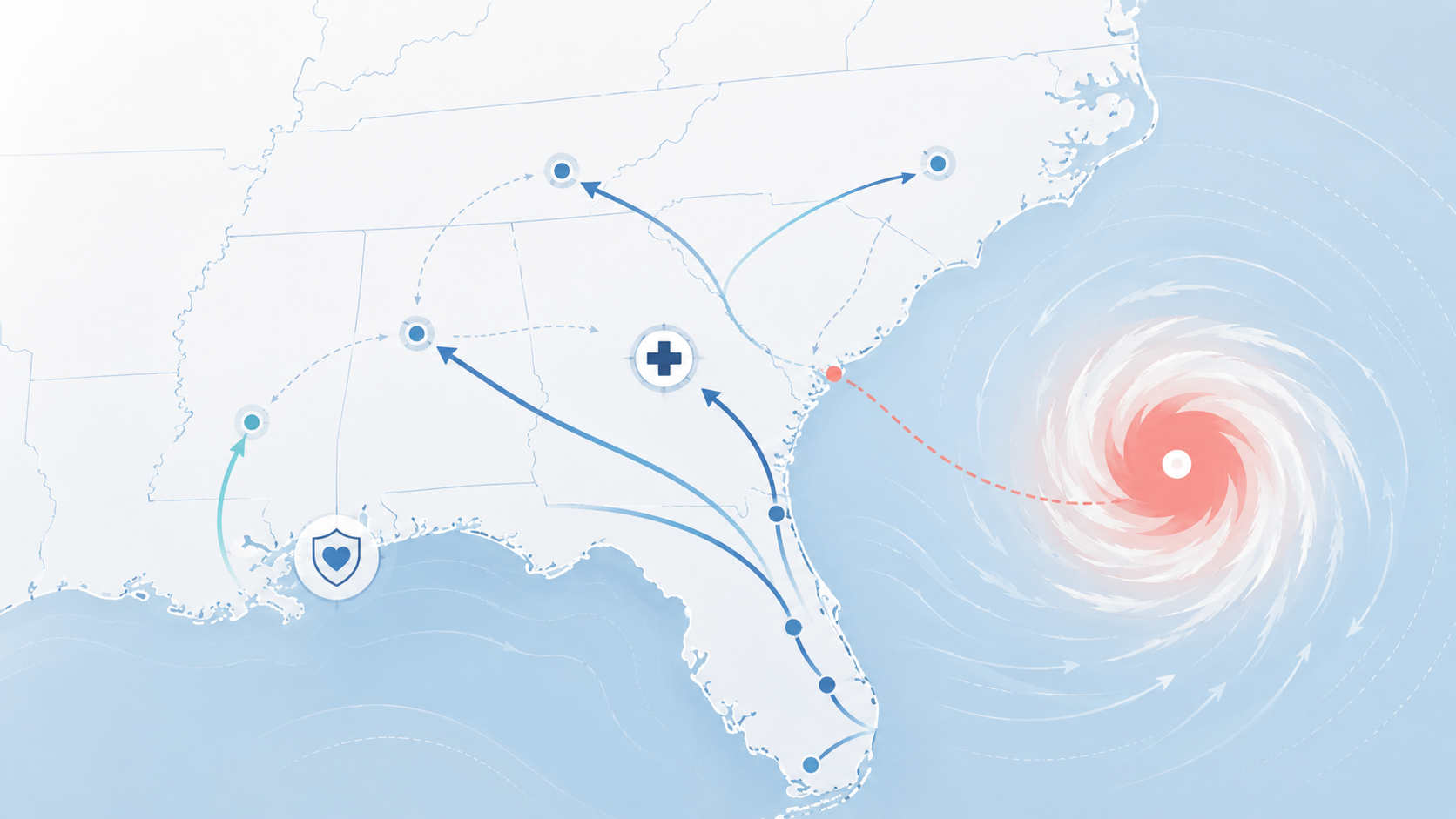
Climate change is increasing the frequency and intensity of extreme weather events, including hurricanes, floods, heat waves, and wildfires. These events disrupt communities, alter mobility patterns, and create cascading risks for population health. From a complex systems perspective, extreme weather events act as large-scale shocks to human society, producing behavioral responses that unfold across interconnected social, environmental, and infrastructural systems.
Our group studies how populations adapt their mobility during extreme weather events and how these behavioral responses shape downstream health risks. We use large-scale mobile device data to quantify evacuation, sheltering, displacement, and return patterns before, during, and after disasters (Yao et al. Environ. Res. Lett. 2025). This work helps reveal differences in preparedness, adaptive capacity, and vulnerability across communities.
We are extending this research to connect mobility responses with health outcomes using clinical and population-level data. By integrating mobility records, environmental exposures, Medicare claims, and causal inference methods, we aim to identify which behavioral responses reduce or increase health risks during climate-related disasters. This research supports evidence-based strategies for disaster preparedness, emergency response, and climate adaptation.