
Modeling and Forecasting of Respiratory Viruses
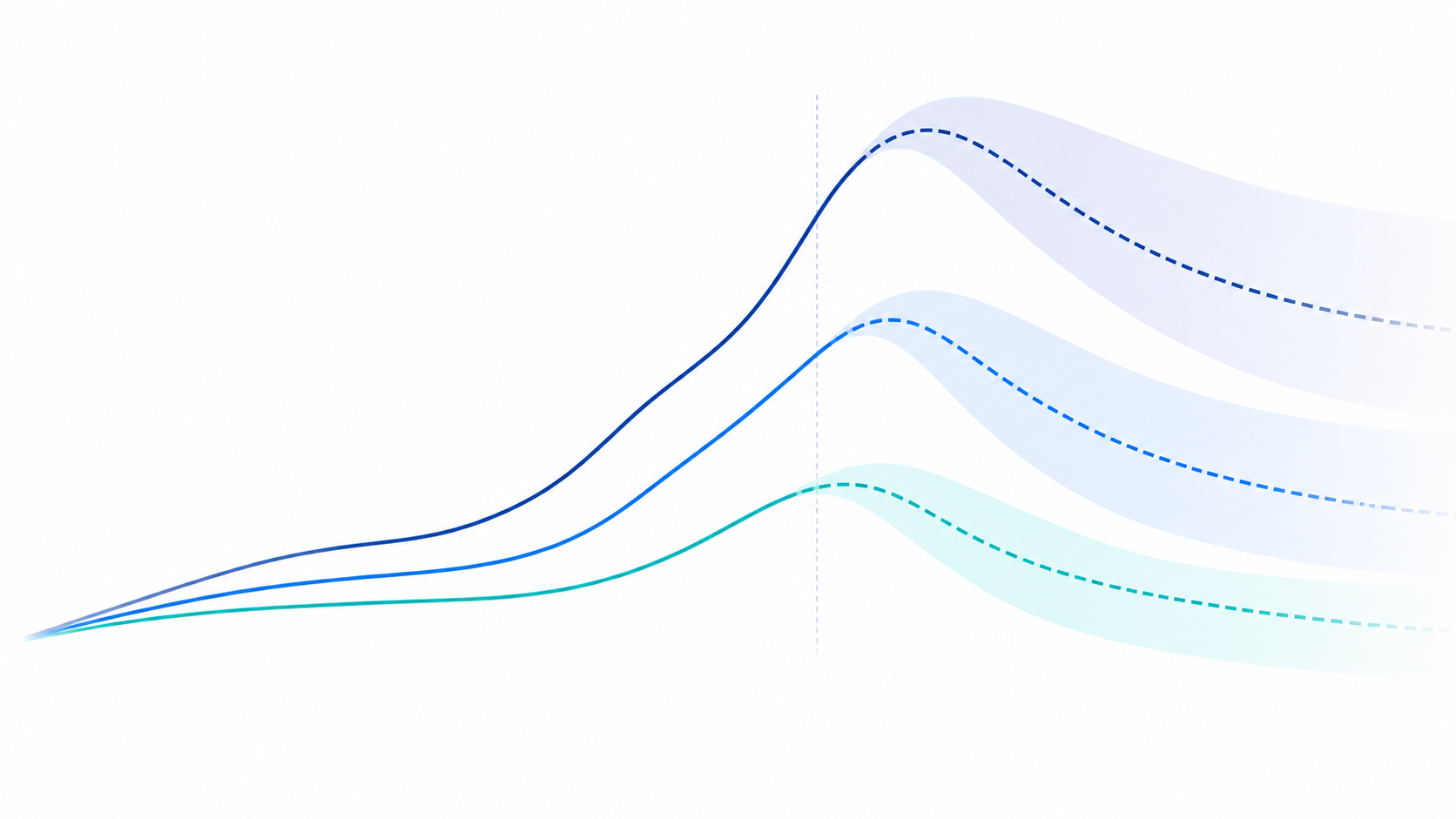
Seasonal and emerging respiratory viruses remain persistent threats to public health. Influenza, RSV, seasonal coronaviruses, and other respiratory viruses generate recurrent outbreaks, strain healthcare systems, and require timely public health decisions. Our group develops mathematical and computational tools to improve surveillance, forecasting, and inference for respiratory disease dynamics.
Our work combines epidemic models, data assimilation, Bayesian inference, network science, and machine learning to forecast respiratory virus activity across space and time. We have developed methods to predict local outbreak onset (Pei et al. PNAS 2018), optimize respiratory virus surveillance networks (Pei et al. Nat. Commun. 2021), aggregate forecasts across pathogens (Pei & Shaman PLoS Comput. Biol. 2020), and correct systematic forecast errors (Pei & Shaman Nat. Commun. 2017, Pei et al. PLoS Comput. Biol. 2019). These studies aim to improve both scientific understanding of respiratory virus dynamics and the practical performance of real-time forecasting systems.
A growing focus of this research is the integration of human behavior and mobility into epidemic models. Respiratory virus transmission is shaped not only by pathogen biology but also by adaptive human responses, including changes in visits to workplaces, schools, restaurants, retail locations, and other settings (Hajlasz & Pei PNAS Nexus 2024). We use high-resolution mobility data (Zhang et al. PLoS Comput. Biol. 2025), behavioral surveys (Yao et al. medRxiv 2025), and artificial intelligence methods (Liu et al. medRxiv 2026) to model these adaptive responses and improve neighborhood-level and regional forecasts of respiratory disease spread.